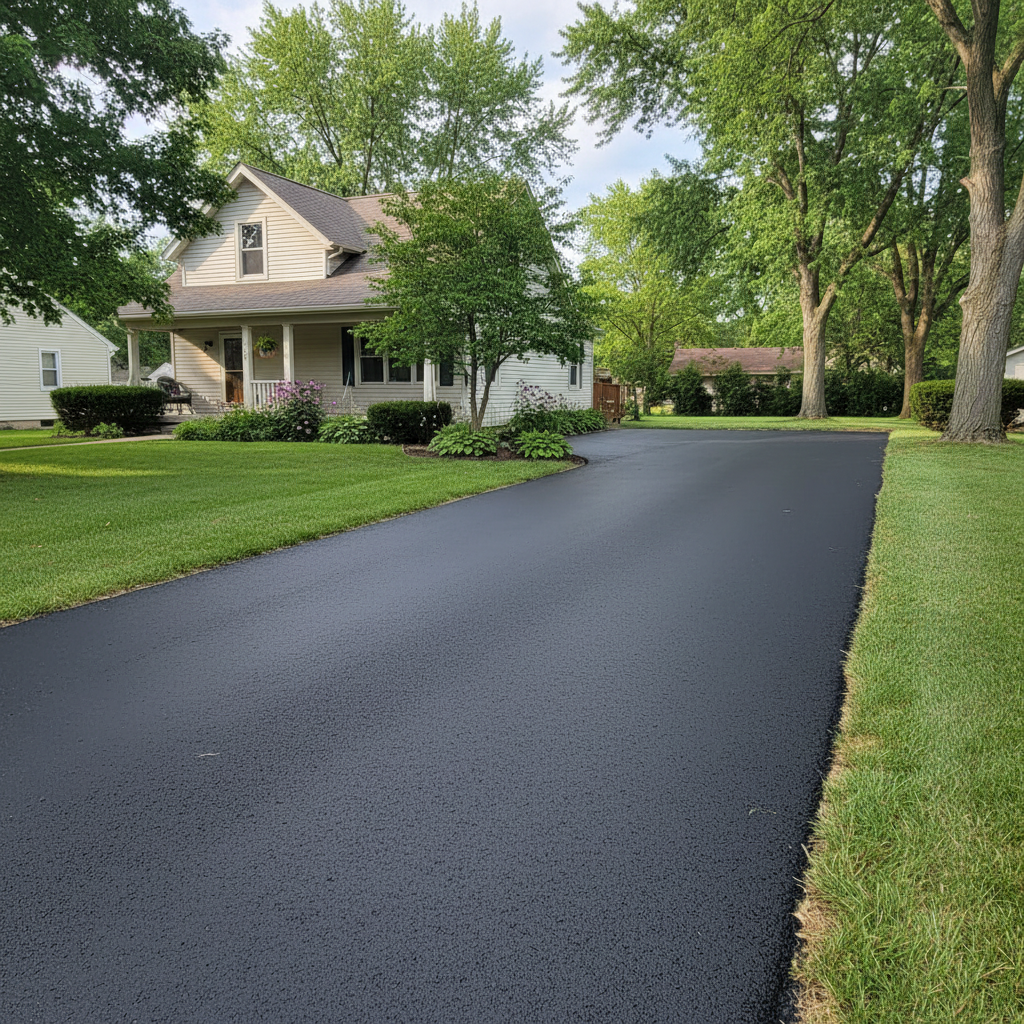
Your driveway is an investment, plain and simple. And here in South Bend, with our crazy winters and hot, humid summers, that asphalt takes a real beating. I've been doing this a long time, and I can tell you, a little bit of regular care goes a long way to saving you a lot of headaches and money down the road. You wouldn't neglect your car's oil changes, right? Think of your driveway the same way.
Extending Your Driveway's Life: The Basics
The biggest thing you can do to extend the life of your asphalt is sealcoating. I recommend getting it done every 2-3 years, depending on traffic and how much sun it gets. It's like sunscreen for your driveway, protecting it from UV rays, water penetration, and even chemicals like oil and gas. Without it, the asphalt binders dry out, and you start seeing cracks and crumbling way too soon.
Another big one is proper drainage. If water is pooling on your driveway, it's going to find its way into those small cracks, and when winter hits, that freeze-thaw cycle we know so well around here will turn those tiny cracks into big potholes. Make sure your gutters are clear and downspouts direct water away from the pavement. If you've got a low spot, sometimes a small French drain or even just regrading the surrounding landscape can make a huge difference.
Lastly, keep heavy loads off it if you can. If you're moving a huge camper or having a concrete truck deliver, try to keep them on the street or a reinforced area. Your asphalt is tough, but it has its limits.
Regular Maintenance You Can Do Yourself
You don't need a crew to do all the maintenance. Some things you can easily handle:
- Keep it clean: Sweep off dirt, leaves, and debris regularly. Organic matter can hold moisture against the asphalt, and dirt can become abrasive.
- Address spills immediately: Oil, gas, and other chemicals can break down the asphalt binders. Blot them up quickly and clean the area with a mild detergent and water. Don't let them sit.
- Trim back roots: Tree roots can be a real menace, pushing up and cracking your asphalt from underneath. Keep an eye on any trees or large shrubs near the driveway and trim their roots if they start to become a problem.
- Patch small cracks: Don't wait for a small crack to become a crater. You can buy asphalt crack filler at any hardware store. Clean the crack thoroughly, then apply the filler according to the directions. It's a temporary fix, but it buys you time and prevents water from getting in.
Warning Signs You Shouldn't Ignore
Your driveway will tell you when it's in trouble, you just gotta know what to look for:
- Alligator cracking: This looks like a series of interconnected cracks, much like an alligator's skin. It means the base layer is failing, and water is getting underneath. This is a serious sign that you're probably looking at a larger repair, not just a patch.
- Potholes: These are obvious, but don't just ignore them. They'll only get bigger and deeper, and they're a tripping hazard.
- Fading and crumbling: If your asphalt looks gray instead of black, and you're seeing small pieces breaking off, it means the surface is deteriorating. This is often a sign that it's past due for sealcoating or needs a surface treatment.
- Standing water: As I mentioned, water pooling on your driveway is a red flag. It indicates a drainage issue or settlement.
- Heaving or sinking: If parts of your driveway are noticeably higher or lower than others, it could be due to soil movement, tree roots, or a failing base. This is common in areas with clay soil, like some of the older neighborhoods around the River Park area, where the ground can shift with moisture changes.
When to Call a Professional
Look, I'm all for DIY, but there are times when you just need to call in the pros. If you're seeing widespread alligator cracking, multiple potholes, significant heaving, or if your driveway is just generally falling apart, it's time to get an expert opinion. Trying to patch over major structural problems is like putting a band-aid on a broken leg – it won't fix the underlying issue and will cost you more in the long run.
We at Valley Asphalt Solutions are always happy to come out, take a look, and give you an honest assessment. Sometimes it's a simple repair, other times it's time for a full resurface or replacement. But catching these issues early, and doing that regular maintenance, is always going to be your best bet for keeping your South Bend driveway in top shape for years to come.